High performers Cultivate more powerful traits

HIGH PERFORMERS CULTIVATE MORE POWERFUL TRAITS

POWERFUL TRAITS

By Craig Johns

It doesn’t matter what industry, the high performers are far more effective at cultivating more powerful traits. We touch on eight of those highly effective traits that unleash their potential and rise above the rest.

MORE WITH LESS

High performers look to consolidate and improve the efficiency by focusing on increasing the ‘outputs that matter’. They reduce products, services and other outputs that don’t matter and focus on making the main thing, the main thing.

Being able to see four or five steps ahead, understanding what the needle-moving requirements are that will get them there, and determining what the distractions are that they need to avoid, allows a high performer to always be in control of their destiny. They are also effective at identifying the must-have skills needed to accomplish those steps, and then will work obsessively to develop them.

montylov-206776-unsplash
Photo by MontyLov on Unsplash

PROACTIVE LISTENERS & OBSERVERS

To perform at your best you need to be a proactive listener and observer. If done effectively you can extract up to three to five times more information than the normal person.

Improving your listening and observation skills requires the discipline to reduce distractions and be proactive in focusing your attention. Most people aren’t aware or don’t understand how unobservant they are.

Keep phones and other attention seeking distractions out of meetings, conversations and other communication tasks. Take notes during conferences and meetings, and keep a journal to record your activities and reflections. Make eye contact during interactions with others and practice active listening skills.

rawpixel-674079-unsplash
Photo by rawpixel on Unsplash

BE COURAGEOUS

During times of hardship, taking a large risk, facing fear, dealing with the unknown or coping with judgment, high performers speak up for themselves. They share their truth and also speak up for others more often.

High performers honor the struggle, as they know that struggling is a natural part of the process when dealing with challenges. They can handle the struggle, because they expect it. They show up and appreciate the hard times and don’t complain during the process.

Rather than focusing on changing the world, decide on whom you’re doing it for and then work hard for them. Be prepared to serve for someone who needs help and then develop the kind of character that will help them deserve the outcome they desire. 

zeyn-afuang-258471-unsplash
Photo by Zeyn Afuang on Unsplash

Fail Fast

High Performers view themselves as imperfect, and allow for mistakes and subsequent learning. They embrace failing, tend to fail fast, and use failure as a learning opportunity.

Under pressure they have the ability to assess their actions differently than the average person. They are able to let go quicker, whereas low-achievers tend to fall into a ‘broken record’ of embarrassment, guilt and shame.

quino-al-135852-unsplash
Photo by Quino Al on Unsplash

Raise necessity

Do you know what your purpose or what your underlying reason why is? Determine ‘why’ it is important to succeed every single day. Be bold, put yourself out there, and place your identity on the line.

A deep sense of identity, with performing with excellence, is a necessity for high performers. They will bring their focus back through raising the necessity so they enter with a high level of intention, so they perform with excellence. They will ask themselves “who needs me to be on my A-Game right now?”, whether it is family, team, peers, customers or end users. How often do you prime your mental ability to perform an activity well?

alex-perez-649207-unsplash
Photo by rawpixel on Unsplash

Fully Commit & Seek Clarity

Most people avoid expressing all their thoughts and feelings when dealing with situations of high pressure. This can lead to unnecessary miscommunication and tension as the recipient feels they have heard all that was meant to be said, and responds accordingly.

A high performer seeks clarity more often as they want to understand why. The average person will jump to judgment based on only 5% of the available information, and therefore can easily mis-read the tone of an email or conversation. These judgments can truly harm us, especially in the digital age, where we can be quick to read and respond with emotion.

It is valuable to grasp what the intention is, what is important and what matters? By using self-reflection, evaluation, and making changes more often, you can sift out distractions and refocus on what is important.

daniil-kuzelev-327645-unsplash
Photo by Daniil Kuželev on Unsplash

Develop Influence

You learn more about yourself when you teach others. Through teaching people how to think and challenging them to grow, you change their lives. When you impact someone else’s thoughts, in a positive way, you have influence. Remember to tell them to be their best.

The more comfortable someone is around you, the more likely you are to be able to influence them. Be relaxed and create rapport with the person you are trying to influence, as you are more likely to persuade them if they like and trust you. Listen to the people you are trying to influence, ask the right questions, be aware of their body language and be patient.

alexandr-podvalny-221893-unsplash

Generate More Energy

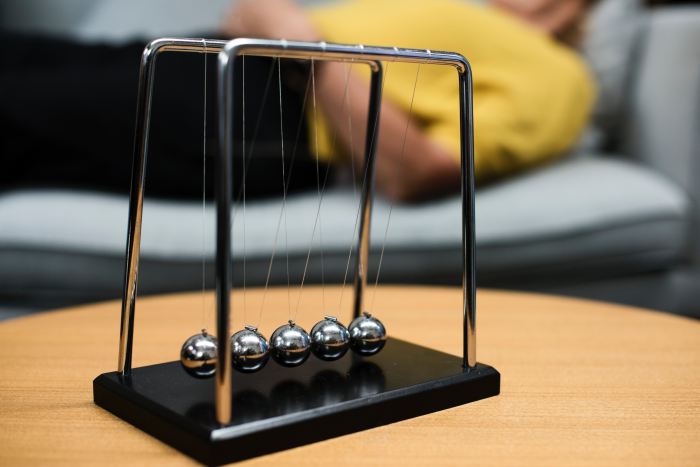
If you want to perform at your best you need to develop the ability to switch off, recharge and maximize your ‘transitions’. Transitions are the times in your day when you switch from one task to another, such as the time in between meetings, driving to and from work, grabbing a coffee and eating lunch.

High performers will generate energy during the day, rather than losing it. Try giving your mind and body a break every 45-60 minutes. Where possible, plan and schedule chunks of time to recharge. Take a quick break, close your eyes, or meditate as the short psychological break can release tension and focus, so you are primed for the next activity.
rawpixel-752506-unsplash
Photo by rawpixel on Unsplash

How are you going to cultivate more powerful traits in your life and remove the traits that are less productive and supportive of a happier life?

DOWNLOAD

To learn more about proactively planning your recovery and scheduling your energy, please DOWNLOAD the Break the CEO Code Whitepaper

READ MORE ARTICLES

Are You Living Link
People Are Our Greatest Assets Link
It’s All About Trust Link
Have We Got The Hiring Process Totally Wrong? Link
Are You Leading A High Performing Culture? Link
Are Leaders Born? Link

LEARN MORE

active CEO COACHING
active CEO CORPORATE
active CEO PODCAST
Craig Johns SPEAKER
Craig Johns BLOG
Contact CRAIG JOHNS
Return to HOME

Healthy Habits in the Workplace

4 HEALTHY BREAK HABITS WHILE WORKING REMOTELY

By Craig Johns

How often have you found yourself so focused on work while working remotely that you forget to take healthy breaks? In the previous article “Undisputed Benefits of Taking a Smoko Break” we looked at the benefits of taking regular, short and frequent breaks, and the importance of detachment from something we are focused on. This article bring you some useful strategies and habits you can form to improve your performance and productivity while working remotely.

Healthy Break Habits

Don’t tell your boss, but taking a power nap has a major impact on your alertness and cognitive function. It can alleviate sleep deficits; improve creative problem solving, verbal memory, perceptual, object and statistical learning, logical reasoning, reaction times and symbol recognition; and improve our mood, fatigue and feeling of sleepiness. They should last between 10 to 30minutes long. If you nap any longer you risk developing ‘sleep inertia’, which is the unpleasant groggy feeling that can take some time to shake off.

Quite often we get caught up in ‘the grind’ or the finer details of what we are doing. Having a break allows you to step back and taking a birds-eye-view of the task or work you are focused on. It allows to you see the big picture and stay mindful of your objectives.

Enjoyment is the number one retention tool in the world. Completing a fun activity by yourself or with your friends and colleagues produces positive emotions. These emotions reverse negative effects of work tasks and increase blood flow to the areas in the brain that we use to focus.

Daydreaming allows us to release and switch on our creative modes. Our brains have a focused mode (learning, writing, working) and a diffuse mode (relaxed, day-dreaming). Our brain activity increases when our mind wanders. We sometimes solve some of our toughest puzzles or problems while daydreaming.

“Idleness is not just a vacation, an indulgence or a vice; it is as indispensable to the brain as vitamin D is to the body, and deprived of it we suffer a mental affliction as disfiguring as rickets…It is, paradoxically, necessary to getting any work done.”

TIM KREIDER

The 4 healthy break habits while working remotely:

  1. Power nap
  2. Birds-eye-view
  3. Fun activity
  4. Day dreaming

PRODUCTIVITY-BOOSTING ACTIVITIES FOR YOUR BREAK

Let’s take a look at some more healthy break habits activities that you can use to boost your productivity while working remotely:

  • Take a walk – 20min walk can increase blood-flow to the brain, which can boost creative thought, enhance the connectivity of important brain circuits, combat age-related declines in brain function, and improve memory and cognitive performance
  • Daydreaming – leads to creativity. Creative activities teach us agency, the ability to change the world, mould it to our liking and to have a positive effect on our environment
  • Eat – replenish the brain with productivity nourishing foods
  • Read – a non-work book. Reading fiction books can lead to better understanding other people, emphasize with them and see the world from their perspective
  • Coffee – morning and afternoon break time is the perfect time for coffee
  • Aesthetically pleasing photos – photos that spark positive emotions like babies, baby animals and funny cartoons
  • Listen to music – can significantly improve our motor and reasoning skills
  • Nap it out – 10-30min naps can improve cognitive function, decreases sleepiness and fatigue, improves reaction time.
  • Exercise – makes you happier, increase energy and helps gain focus. Less than 10minutes is all you need.
  • Have a chat – with co-workers or friends
  • Meditate – your brain’s beta waves can be dramatically reduced during meditation. It lowers stress levels, improves overall health and enhances creativity
  • Make it fun – plan a future trip or vacation. The anticipation of a trip can make people happier that the actual trip itself
  • See the nature – Spending time in nature is good for your immune system, improve focus and relieve stress
  • 20min Eye Exercise Rule – 20-20-20 rule – Every 20min, take at least a 20sec break, looking at objects 20 feet away.
  • Goofing Around online – the distractive nature of checking text messages and surfing social media can assist with refreshing the brain

“To maximize gains from long-term practice,” Dr. Ericsson concluded, “individuals must avoid exhaustion and must limit practice to an amount from which they can completely recover on a daily or weekly basis.”

Professor K. ANDERS ERICSSON

BREAK METHODS

Here are a few methods that can help you implement a successful healthy break habits strategy in your day.

  1. Pomodoro Method – alternate 25mins on, 5mins off. After 4 cycles take a 30min break. Helps you get rid of distractions and focus more intently. Finite beginning and end of small chunks increases urgency in finishing tasks quickly and making decisions faster
  2. 90minute work blocks – works with our body’s natural rhythm (ultradian rhythm) of 90minutes of activity and 20minutes of rest. We do this during sleep and during the day. When Professor K. Anders Ericsson studied elite performers like violinists, athletes, actors and chess players, he found that the best performers practiced in focused sessions of no more than 90 minutes.
  3. 52-17 method – split between the Pomodoro Method and 90min Blocks. Research suggests that it could be the most productive schedule. Working with purpose.
  4. 2x 15min breaks per day – a good starting point for those who have less flexibility in their work day or mentally cant get their heads around taking breaks.

“The reason the most productive 10% of our users are able to get the most done during the comparatively short periods of working time is that their working times are treated as sprints. They make the most of those 52 minutes by working with intense purpose, but then rest up to be ready for the next burst. In other words, they work with purpose.”

COURTNEY SEITER

What are the healthy break habits strategies you are going to choose?

DOWNLOAD

To learn more about proactively planning your recovery and scheduling your energy, please DOWNLOAD the Break the CEO Code Whitepaper

READ MORE ARTICLES

Are You Living Link
People Are Our Greatest Assets Link
It’s All About Trust Link
Have We Got The Hiring Process Totally Wrong? Link
Are You Leading A High Performing Culture? Link
Are Leaders Born? Link

LEARN MORE

active CEO COACHING
active CEO CORPORATE
active CEO PODCAST
Craig Johns SPEAKER
Craig Johns BLOG
Contact CRAIG JOHNS
Return to HOME

Craig Johns Are you Living

ARE YOU LIVING?

Photo by Anne Lin on Unsplash

ARE YOU LIVING?

By Craig Johns

Life is not separate from work as work is part of life. Too often we hear people in the workplace saying, “I’m working hard now so I can live my life when I retire or when the weekend comes around or during my next holiday”.

“I don’t think of work as work and play as play, it’s all living” 

Sir Richard Branson

Life is how work, home, community and your private self integrate, intersect and interact. They interconnect and feed off each other as we grow and develop through life. The biggest challenge in life is to figure out how to find the time we desire to excel at all aspects of our life.

How many hours a week is required to deliver peak performance at work?

If I spend an extra hour at work, how does that affect my life at home?

To ensure that I have maximum energy at work, how much time do I need to be exercising, switching off, socializing and sleeping?

Should I spend money and take that holiday to paradise now or wait until I have more money saved and are a bit older?

Do the people I socialize with have a positive or negative impact on the other aspects of my life?

We talk about having to make sacrifices in life. This maybe true, but sacrifices are all just choices. Choices that we have full control over. So, how do we know what choices to make if we want to achieve at a higher level? If you don’t have a clear purpose, vision and goals, then you will find it very difficult to find clarity in the decisions you need to make.

“A master in the art of living draws no sharp distinction between work and play.” 

L.P. Jacks

Work-life balance is a common buzz phrase talked about in society. So what is it? Is it either standing still and stagnant, or spending half our life working and half our life living? Depending on how you define balance, it will depend on how you approach your life. If you are working 12hrs a day 7 days a week doing something that you don’t enjoy, engage with or understand why you are doing it, then it only leaves only 4hrs a day for other activities in life, if we take into consideration that we are sleeping 8hrs a day.

“Never get so busy making a living that you forget to make a life.” 

Unknown

Let’s take a look at Work-life integration. It is an outcome of people exercising control and choice in their life to meet life’s challenges. They ensure that they enjoy what they do, take pleasure out of the people they interact with, love becoming better, have purpose and feel satisfied with the life they live.

“I never did a day’s work in my life. It was all fun.” 

Thomas Edison

Your emotions, mood and energy tend to transfer from your work to your life outside of work and vice versa. Very few people have a split personality that they can switch on and off depending the circumstances. Therefore, if you want to be successful in all areas of your life, it is important to be genuine, honest and believe in who you are.

READ MORE ARTICLES

People Are Our Greatest Assets Link
It’s All About Trust Link
Have We Got The Hiring Process Totally Wrong? Link
Are You Leading A High Performing Culture? Link
Are Leaders Born? Link
It’s Your Story Link
Be A Rookie Link

LEARN MORE

active CEO COACHING
active CEO CORPORATE
active CEO PODCAST
Craig Johns SPEAKER
Craig Johns BLOG
Contact CRAIG JOHNS
Return to HOME